
With the rise of AI, I wouldn’t blame you for wondering whether it’s still worth spending money on a blog for your health or wellness business. After all, people can now ask ChatGPT pretty much anything, social media has become a huge source of health information, and even Google is answering people’s questions before they’ve had a chance to click on a website.
Things have certainly changed since I started writing health content twenty years ago!
Back then, blogging was largely about getting your website in front of as many people as possible through Google. While that’s still a good reason to have a blog, I think some of the biggest benefits of blogging today go well beyond search engine rankings.
A good blog can help people get to know you, give prospective patients a little more confidence in choosing your practice, make life easier for your existing clients, and give you a wealth of content to use elsewhere in your business.
The key is knowing what to publish, who you’re writing for, and what you want your content to achieve.
So, if you’re weighing up whether blogging deserves a place in your marketing budget for 2027, here are some of the benefits worth considering.
1. There’s still a huge demand for reliable health information

One of the things I love about writing for the health and wellness industry is that there’s never a shortage of things people want to learn about.
Whether someone is considering cosmetic surgery, struggling with menopause symptoms, looking to improve their gut health, or trying to work out why their skin has suddenly started breaking out in their forties, they’re going to have questions.
Research published by the Pew Research Center in April 2026 found that:
- 85% of US adults get health information from healthcare providers at least some of the time
- 60% turn to major health information websites
- 36% get health information from social media
- 22% use AI chatbots as a source of health information
What’s also interesting is that 73% of adults get their health information from at least three of the seven types of sources included in the survey.
People aren’t necessarily choosing one source of information over another. They may see something on Instagram, ask ChatGPT a few questions about it, read an article written by a specialist, and then decide to book a consultation.
Having a blog gives your business an opportunity to be part of that process.
2. You can start building trust long before someone books an appointment
Choosing a healthcare provider can be a big decision. Someone considering surgery, for example, may spend weeks or even months researching their options before they’re ready to contact a surgeon. They might be nervous about the procedure, worried about potential complications, or simply struggling to work out which surgeon is right for them.
Now imagine they’re looking at two different surgeons’ websites. One has a fairly standard collection of treatment pages, a biography, and a gallery of before-and-after photographs. The other also has a collection of helpful articles explaining the different surgical options, what happens during recovery, how candidates are assessed, and what patients should realistically expect from their results.
Those articles give prospective patients a chance to become familiar with the surgeon’s approach before they’ve even stepped foot in their clinic.
Trust is especially important when it comes to health information. In its 2026 research, the Pew Research Center found that 75% of Americans considered medical training highly important in a health information source, while 72% placed a similarly high value on information being easy to understand.
This is where I think combining clinical expertise with good writing can make a real difference.
Your blog gives you the space to explain things properly, share your knowledge, and show people how you approach their care without every piece of content feeling like a sales pitch.
3. Blogging can still help more people discover your business

There’s been a lot of talk about the decline of traditional SEO since AI search came along, and there are some interesting statistics behind those conversations.
An earlier 2025 study by the Pew Research Center found that people clicked on traditional Google search results during 8% of visits where an AI summary appeared, compared with 15% of visits without one.
So yes, getting people to click through to your website may be becoming more challenging for certain types of searches. That doesn’t mean people have stopped visiting websites altogether, though, or that there’s no longer any value in creating content for search engines.
What I’d recommend is being a little more selective about the topics you invest in.
Let’s say you run a private dermatology clinic. You could publish a blog titled What Is Acne?, but you’re going to be competing with thousands of other websites, and the question itself can easily be answered in an AI-generated summary.
Now consider some of these topics instead:
- Why Am I Still Getting Acne in My Forties?
- Can You Treat Acne Scars While You Still Have Active Acne?
- What Happens During Your First Dermatology Appointment for Acne?
- Microneedling vs. Laser Treatment for Acne Scars: How Do We Decide Which Is Right for You?
- When Is It Worth Seeing a Dermatologist About Adult Acne?
These topics give you much more scope to share your expertise, answer specific questions, and reach people who may actually benefit from your services. Well-written, original articles also give AI search tools more information about your business that they could potentially reference in their answers.
There are no guarantees when it comes to search visibility, AI-generated or otherwise, but having a useful collection of content creates more opportunities for your business to be discovered than relying solely on a handful of service pages.
4. A good blog can bring you enquiries, not just website traffic
Would you rather have 10,000 people visit your website who have very little interest in your services, or 500 visitors who are actively considering working with someone like you? It’s something worth thinking about when planning your blog.
I’ve seen plenty of businesses invest in articles simply because a particular keyword has a high monthly search volume, without giving much thought to what the person searching for it might be looking for.
If you run a medical weight management clinic, for example, an article about the calorie content of various fruits could attract a decent number of visitors. How many of those visitors are likely to be looking for medically supervised weight management support, though?
An article explaining what happens during a medical weight management consultation might attract fewer readers, but those readers could be much closer to taking the next step.
Ideally, your blog should contain a mix of content that supports people at different stages of their research.
| Stage | What the reader is thinking | Example blog topic |
| Awareness | Why am I experiencing this? | Why Does Losing Weight Get Harder During Perimenopause? |
| Research | What options are available to me? | Medical Weight Management: What Are Your Options? |
| Consideration | Is this service right for me? | Who Is Suitable for a Medically Supervised Weight Loss Program? |
| Decision | What happens if I go ahead? | What to Expect During Your First Weight Management Consultation |
| Ongoing support | How can I manage my health moving forward? | Building Sustainable Habits After Completing a Weight Management Program |
Each article serves a different purpose, and together they can help people make more informed decisions about their health.
Include relevant links to your services and give people a clear next step if they’d like to find out more. You don’t need to turn every article into a sales pitch to generate enquiries from your blog.
5. You’ll have plenty of content to use across your other marketing channels
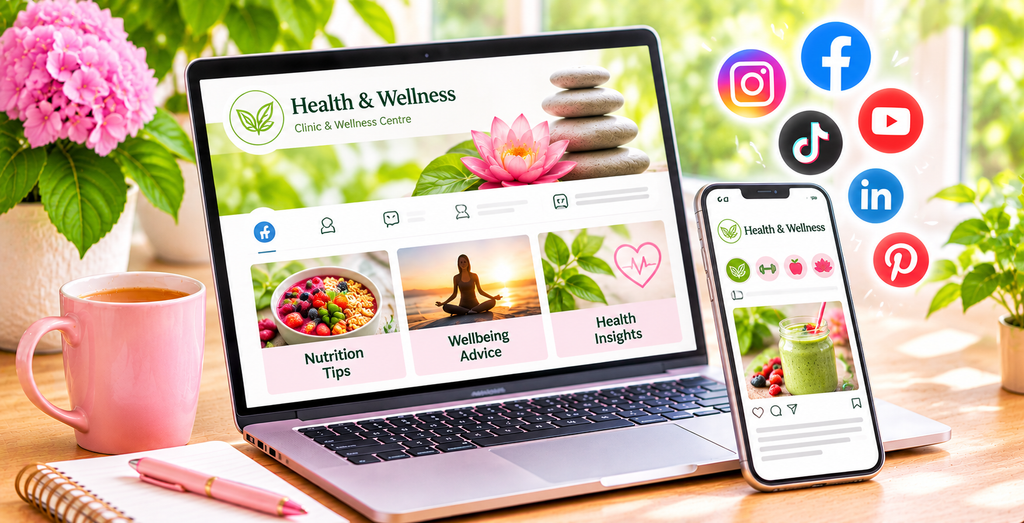
This is one of my favorite benefits of blogging, and something I don’t think enough businesses make the most of. You spend time briefing a writer, have a clinician review the content, publish a lovely article on your website, share it on Facebook once, and then move on to the next one.
There’s so much more you could be doing with it! Let’s say you’ve published a comprehensive article about the lesser-known symptoms of perimenopause.
From that one article, you could create:
- An Instagram carousel exploring five lesser-known symptoms
- Several individual educational social media posts
- A short video script for one of your clinicians
- A patient email newsletter
- An infographic explaining the different symptoms
- A downloadable symptom checklist
- A series of discussion starters for your online community
- A frequently asked questions section for your menopause service page
You’ve potentially got weeks’ worth of marketing content from one well-researched article. It also means the medical information underpinning those smaller pieces of content has already been researched and, where appropriate, clinically reviewed.
If you’re constantly struggling to think of things to post on social media, developing a blog that sits at the center of your wider content strategy could make things a whole lot easier.
6. A blog can keep working for you long after you’ve paid for it
One of the best things about evergreen content is that its useful life doesn’t necessarily end a few days after you’ve published it. A well-written guide to preparing for your first physiotherapy appointment could still be relevant in three years’ time. The same goes for an article explaining what happens during a skin consultation or how to prepare for a nutrition assessment.
Of course, health content needs to be reviewed regularly. Medical guidance changes, new research emerges, treatments evolve, and information that was perfectly accurate when you published it may need updating further down the line.
However, you don’t necessarily need to start from scratch every time.
You might commission an article today, update it periodically, and continue using it in your marketing and patient communications for years.
When you’re looking at the cost of blogging, I’d encourage you to consider the potential lifetime value of a piece of content rather than simply looking at the price of an individual article.
For example, if you spend $200 on an article that helps generate several new client enquiries over the course of two years, provides content for your social media accounts, and becomes a resource your team regularly shares with patients, that $200 could turn out to have been a pretty worthwhile investment.
Not every article will achieve all of those things, but planning your content around multiple uses gives you a better chance of getting value from your investment.
How often should a health or wellness business be blogging?
This is a question I’ve been asked quite a few times over the years, and I don’t think there’s one answer that suits every business.
A large medical practice covering several specialties will probably have very different content needs from an independent nutritionist who offers a handful of services.
If you’re just getting started, here are some publishing schedules I’d consider.
| Publishing frequency | Who it might suit | Articles per year |
| One blog per month | Independent practitioners and businesses with smaller budgets | 12 |
| Two blogs per month | Small clinics wanting to build a useful resource library | 24 |
| One blog per week | Established practices with several services | 52 |
| Two blogs per week | Larger healthcare businesses with multiple specialties | 104 |
These are suggested starting points rather than SEO requirements.
I’d much rather see a small business publish two fantastic, well-researched articles a month than four generic articles that don’t really offer their readers anything new.
Even one article a month gives you 12 new patient resources by the end of the year. Keep that up for three years, and you’ve got a collection of 36 articles covering areas of health that are relevant to your audience.
That’s a pretty good starting point for a smaller business.
So, is blogging still worth investing in for 2027?
Absolutely, although I do think the way businesses approach blogging needs to change a little.
The days of commissioning a few hundred words on a generic health topic, popping some keywords in, and hoping for the best were never my favorite approach to content marketing anyway.
Healthcare professionals have so much knowledge they could be sharing with their patients and clients, and I’d love to see more businesses making the most of it.
Create articles that answer the questions you wish patients would ask. Share your thoughts on developments within your specialty. Explain complicated treatments in a way that people can understand and give prospective clients a little insight into what working with you would be like.
Have a think about all the other ways you could use that content throughout your business, too.
You don’t need to become the next major health information website or publish hundreds of articles a year to make blogging worthwhile. A carefully planned collection of genuinely useful content can be a valuable addition to a business of almost any size.
Need a little help getting your blog off the ground?
Coming up with interesting topics, researching medical information, and finding the time to write about it all can be quite a challenge when you’ve got a business to run. That’s where I can help.
I’ve spent twenty years writing content for a whole variety of health and wellness businesses, from independent practitioners to world-renowned surgeons and specialist clinics.
Whether you’re starting a blog from scratch, trying to breathe a little life into one you haven’t updated in a while, or looking for someone to take care of your ongoing content needs, I’d love to hear from you.
Feel free to drop me an email. We can talk about your business, the people you’re hoping to reach, and how we can create a blog that’s genuinely worth investing in.

Leave a Reply