
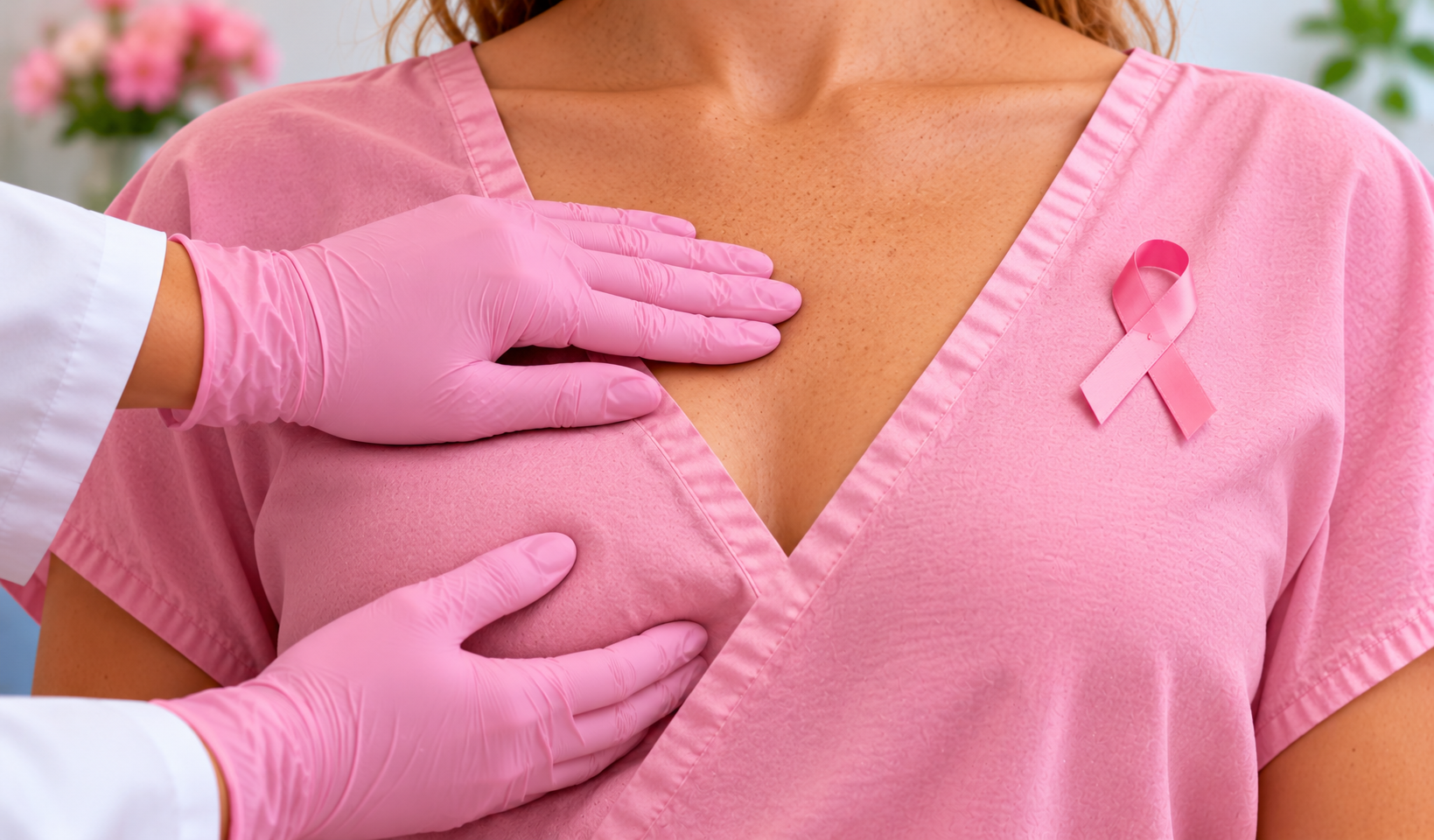
Most of us are creatures of habit when it comes to our bodies. We tend to notice fairly quickly if something doesn’t feel quite right…A headache that lingers, a lump that wasn’t there before, a change in how we feel day to day. However, if you’re a woman in your 40s or 50s, it isn’t always that simple.
During perimenopause, your body goes through so many changes that it becomes easy to put new or unusual symptoms down to hormones, rather than stopping to ask whether something else might be going on. October is Breast Cancer Awareness Month, and one thing that doesn’t get talked about enough is how confusing breast changes can be during this stage of life.
Hormonal fluctuations in the years before and after menopause can really alter how your breasts feel. They can be tender, lumpy or uneven at different times, which makes it much harder to know when a change is simply hormones, or when it’s something worth a proper look.
If you’ve ever noticed a change and told yourself it’s probably just your hormones, you’re certainly not alone. Below, we’ll explore why this is such a common thought during perimenopause, the signs worth getting checked, and why acting sooner rather than later is so important.
Why Perimenopause Makes Breast Changes Confusing

As oestrogen and progesterone levels fluctuate during perimenopause, your breast tissue can change alongside them, sometimes quite noticeably. Many women notice more tenderness, lumpiness or unevenness than they’re used to, and it’s easy to assume that any new change is simply another part of the same hormonal picture.
The trouble is, this can make it harder to notice when something is actually different, rather than just your usual pattern. Getting to know what’s normal for you, and how that changes throughout your cycle or across perimenopause, makes it much easier to spot when something falls outside of it.
Signs Worth Getting Checked
It’s worth knowing the changes that are always worth mentioning to your GP, whatever stage of life you’re at. These include:
- A new lump or swelling in the breast, upper chest or armpit,
- Changes to the skin such as puckering, dimpling or redness
- A nipple that’s become pulled in or started producing unusual discharge
- A change in the size or shape of your breast
Breast pain on its own isn’t usually a sign of breast cancer, but if it’s there most or all of the time, it’s still worth having checked.
Cancer Research UK have put together a helpful breast awareness guide you can keep at home, with a simple checklist of what to look and feel for, and tips for making sure you’re taken seriously when you do raise a concern.
Why It’s Always Worth Acting Sooner
The earlier breast cancer is found, the more successful treatment is likely to be, which is exactly why it’s so important not to wait. Whether that’s waiting to see if a change settles down on its own, or waiting weeks for a routine GP appointment. If something doesn’t feel right, it’s always worth getting it looked at, even if you suspect it’s probably nothing.
At EssexPrivateGP, you can see one of our experienced GPs quickly, without a long wait for an appointment, and talk through any changes you’ve noticed in confidence. As part of our well woman health checks, we also offer breast examinations and personalised advice on your individual risk, so you can feel reassured, or get the right referral, without delay.
Book a well woman health check today, and give yourself the reassurance of knowing, rather than wondering.